This will end.
Where will these Republicans be then?

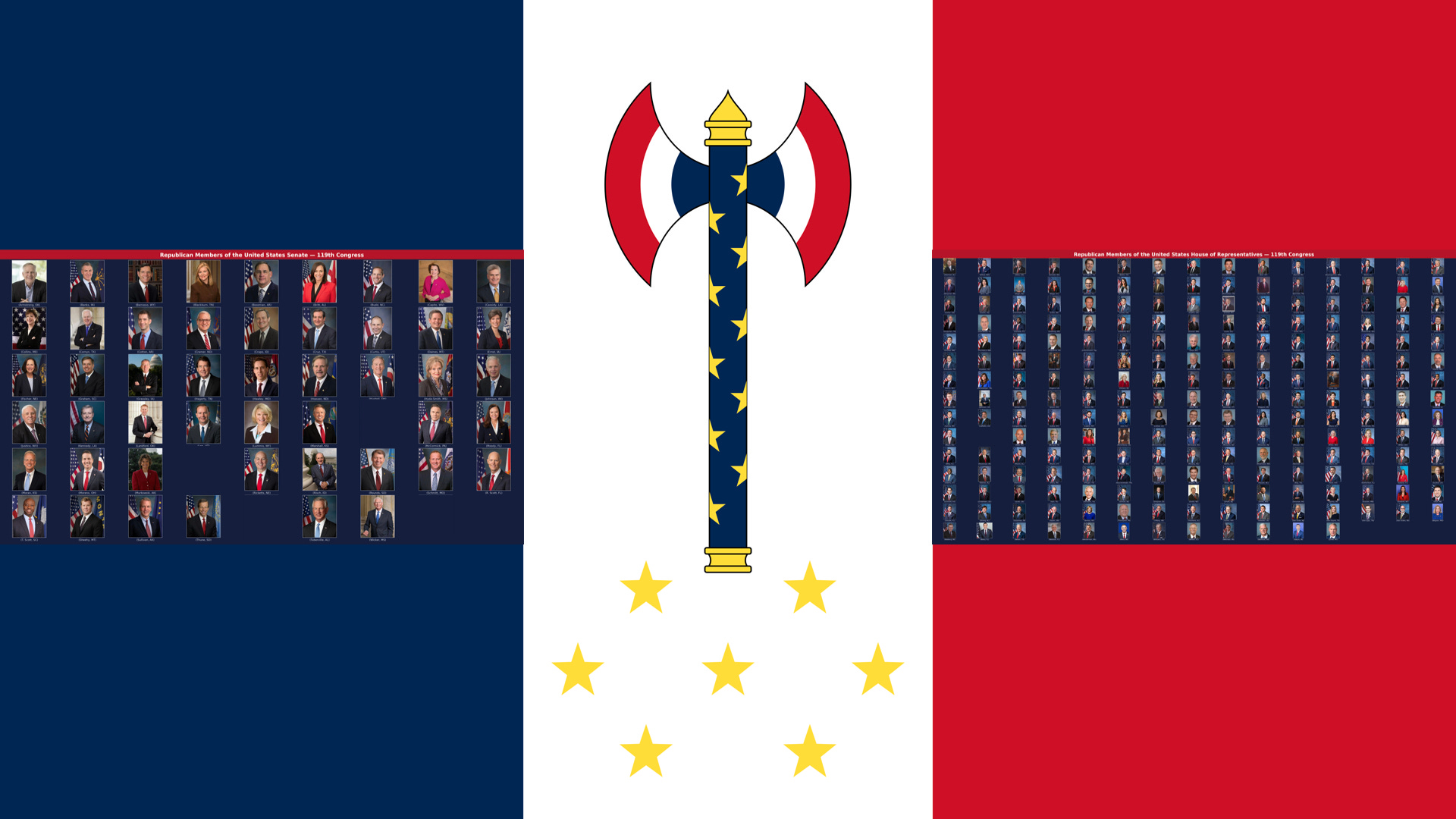
In the late spring of 1940, the German army broke through French lines, and the government in Paris collapsed. In its place arose a regime in the resort town of Vichy. The regime was led by Marshal Philippe Pétain, a hero of the first Great War. For four years, this government ruled in the shadow of the occupier. They enforced Nazi laws. They rounded up Jews for death camps. They were the elite of French society, respectable men who believed they were saving their nation by working with its conquerors. While the occupation held, these men were the law, and the law was respected.
Then on June 6, 1944, the Allies landed on the beaches of Normandy. The German front cracked. Almost overnight, the world flipped. The men of Vichy were no longer the state. They were the enemies of the state. The respectable became the reviled. History had moved on, leaving them on the wrong side of a very sharp line.
We are at a time of extreme rhetoric. I don’t invoke the Vichy to suggest our government is run by Nazis. They are not Nazis. But there is a lesson in this history that should be the focus of the Republicans who allow this nation to be ruled by a man who openly threatens genocide, or who give him power by not resisting his outrages.
Anyone who has any friends working on Capitol Hill knows that almost no Republican in Congress likes or respects the President. The President’s policies are reviled. His behavior is reviled. He lies like a fish inhales water. He betrays the most important principles of conservative thought. He has destroyed alliances that were fundamental to the post-war world. He is, without doubt, the most corrupt man to occupy that office in the history of the nation. Republicans know that his economic program is idiocy. They recognize the betrayal in his launching war after war after promising to be the candidate of peace. None of these Republicans want to invade Iran. None support starving the Cuban people. None believe Greenland should be occupied or stolen from the Danes. None believe that Canada should become our 51st state. None think Putin is an ally. Yet practically every single one of these Republicans stands silent while a man they recognize has neither the temperament nor intellect nor integrity to occupy the most powerful office in the world rage tweets in the middle of the night, mocking the Islamic religion, and threatening war crimes that would make Stalin blush.
They are cowards. They are literally the definition of cowards—unwilling to bear personal risk despite the risk of catastrophic loss faced by the nation. Their lives are not threatened. I assume if they are a member of Congress, they could get a job someplace else. And yet they hide, waiting for the moment to pass, imagining that there will be a time when they can hold their heads high again, proud to call themselves Republicans.
Yet the lesson of the Vichy is that that time will not come for a very long time, at least for these Republicans.
America is coming to recognize the betrayal that Donald Trump is. They believe he has taken us to war to avoid confronting the crimes revealed in the Epstein files. They have no faith in his economic program. They’ve even lost faith in his immigration program. He is an embarrassment. When we come to see that we all have come to recognize this fact about him, his regime will collapse, and with it will collapse the reputations of everyone too cowardly to say now what will then be obvious to everyone then.
There are exceptions, no doubt. Some of his biggest champions have turned against him: Tucker Carlson, Marjorie Taylor Greene, Candace Owens, Joe Rogan. There are even a few members of Congress with the courage to call him out: Thomas Massie, Rand Paul, Tom Tillis, Todd Young. (Even Mitch McConnell has mustered words of rebuke, though that man must realize his career-defining error in not voting to convict after January 6.) There are, in other words—and obviously there would be—some who see their own integrity as more important than stupid loyalty. Some, in other words, who give us hope.
But when the history of this moment is written, the focus will not be on the malignant narcissist who stands at the center of our government. The focus will be on those who let him stay, or who, by not resisting, gave him power. Kevin McCarthy declares Trump the most powerful president since FDR. He is only powerful because of them.
Across history, many nations have suffered from similarly pathological leaders. But we had been taught to believe that our Constitution somehow protected us from such monsters. It wasn’t surprising that Russia couldn’t displace Stalin, or that, under the Weimar Constitution, Germany couldn’t displace Hitler. But we told ourselves that through a system of complicated checks and balances, we would be assured of protection against the authoritarianism that now occupies the White House.
The Framers knew that structure alone accomplished nothing. They knew that to protect our traditions and our values, our leaders would need courage. But they imagined—they promised—that their system of elective democracy would inspire the cream to rise to the top; that our government would be led by the most talented among us.
America has never been led by the most talented among us. Yet within the lifetime of at least a third of us, there was a time when, at least at moments of crisis, a majority of both parties could be counted on to act on principle for the good of the nation. When Barry Goldwater, Hugh Scott, and John Jacob Rhodes walked down Pennsylvania Avenue to tell President Nixon that he needed to resign, they knew they were condemning their party to years of loss. But they believed that their oath was not to a party.
The deepest frustration of Americans today with their government is the belief that we are led by no leaders. That all of politics is just filled with politicians. That both sides are horrible, even if one side is worse. The greatest threat to our democracy is that we have lost faith in the very idea of our democracy. Because within that idea is a commitment that in a moment of crisis, leaders do right regardless of consequence. It is the belief in a Churchillian commitment never to surrender.
Our loss of faith makes sense, because these cowards have surrendered. It is literally unimaginable that we would have a president who more clearly demonstrates he is not fit for office. And yet, each morning just brings more rage tweets from that same incompetent. And each day just continues with the cowards who call themselves “leaders” smiling and carrying on, as if there’s nothing weird about the man who occupies 1600 Pennsylvania Ave.
If you cannot say ‘enough’ to this, you deserve the disgrace that is surely coming. Your weakness has brought a profound shame upon our republic, one recognized by free people across the globe. Let us hope that, like the French, when this insanity is finally stopped, our nation has time to recover. Your legacy will not.
He’s angry, Vic — it’s very difficult to combine academic brilliance with cold anger in an online posting — but Lessig has done it here, so give him some credit. The brilliance comes through when he sees, as so many here have not, yet, that there will be No Exit for any of us for the roles we play, or duck, in this Time of Troubles: we’re to be the subjects of many analyses, academic & pop culture too, of what we did and didn’t do when Duty Called… Think of the other Times — The Revolution, the terrible 1800 Election, the Civil War, Carpetbagger “Reconstruction”, Isolation & Expansion eras, The Great War of Europe when we both vacillated & starred — we have been both Good Guys & Bad Guys — which will we be now? Lessig gets this, and warns us: existential “choice” — there is much of this for each of us now, for “These are the times that will try men’s souls…” — some will “act” & some will “not”, and there will be much “blame” accorded later… I am glad for Lessig’s reminder.
Prof.Lessig, what strikes me reading this is how old this behaviour is. The architectural constraints (checks and balances, separated powers etc ) only work when the people inside the system have a reason to enforce them. The moment an entire party decides loyalty to one person outweighs institutional self-interest, the architecture reverts to what it always was underneath -> words on paper (Madison?) The exceptions you name, Massie, Paul almost prove this right? The system was designed assuming most actors would defend their institutional turf. It wasn't designed to function when courage is the exception rather than the default.