A workable converse-1983 action
Heat up the Constitution to melt ICE

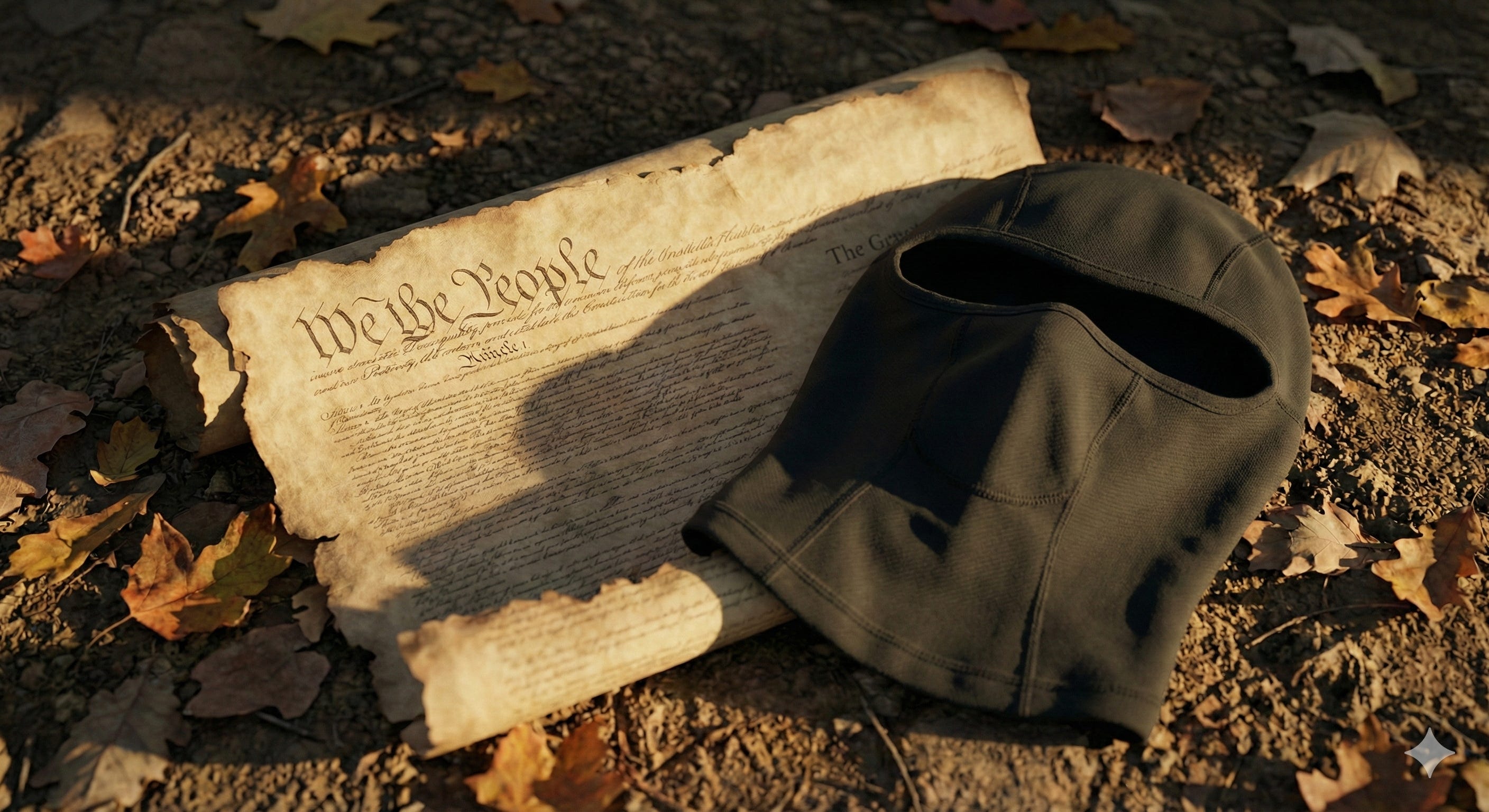
I was a student at the Yale Law School when one of the superstars on that faculty—Akhil Amar, then just 28—published the article that described the “Converse-1983” action: a cause of action that would give state courts the power to enforce the Constitution against federal officers. At the time, the idea was just an idea from a brilliant professor. But times have changed. Though Akhil remains brilliant (see his Born Equal), the nation is different. And today, it needs his idea to work.
The challenge, however, is that federal law would give a federal officer the ability to remove any action against a federal officer to federal court. Federal court proceedings could take years. The consequence would be no effective remedy and, more importantly, no immediate means for corralling rogue federal forces.
That reality has led to some brainstorming with state legislators, colleagues, and especially the great Steve Vladeck. I’m posting today the upshot of that brainstorming, with an open request for comments. You can see and comment on the proposed law—the Emergency Law Enforcement Accountability and Oversight Act—on Github. A PDF is here.
The aim of this legislation would be to increase the incentives for officers to obey the Constitution. If they fail to obey the Constitution, they would face immediate administrative penalties. Because the proceeding is administrative, and not within state courts, it avoids the reach of the officer removal statute. And because it is meant to operate directly on the officers and any personal property they have, it will force them to think twice before following any unconstitutional order. The structure has other important elements: it gets triggered only if an emergency is declared by the governor, with the concurrence of the attorney general; that declaration must identify the types of actions deemed to violate the Federal Constitution unquestionably; fact-finding is done by a citizen jury convened to be more fully representative of the community than an ordinary jury, and in principle, it is neutral between rogue state and rogue federal officers.
The objective of this statute is to build a mechanism to defend our rights peacefully. The need for such a mechanism has been created both by the unregulated rogue behavior of the federal government and by the obvious failure of the Second Amendment to create the incentives it was originally designed to create. We forget that the Second Amendment originally was not primarily about the right to keep an arsenal in your basement for the fun of it. Its purpose was to ensure that the states had adequate means to defend themselves against a rogue federal government. But of course it’s crazy today to imagine state militias waging war against the federal government, which should force us to think creatively about how to make effective the basic premise of our Constitution: that no one is above the law, neither federal nor state officers, and that we should seek a way to enforce the Constitution that defends that principle of peace.
I’d be grateful for your review of this idea and any comments you might have. I’m especially grateful to the state legislators thinking carefully about how to defend the residents of the Commonwealth, to Steve for his insights, and, as always, to Akhil for his brilliance.